


Understanding Turquoise vs. Dyed Howlite: The Ultimate Comparison helps jewelry lovers and spiritual seekers tell apart a prized ancient gem from an affordable, color-treated mineral. Many buyers search for this guide after noticing strange blue dye on their skin or wondering why two similar blue beaded bracelets carry wildly different price tags. In this detailed guide, we share our studio insights on mineral traits, physical testing methods, and distinct spiritual meanings so you can choose your stones with total confidence.
- 💎 Mineral Identity: Genuine turquoise is a rare copper-rich phosphate, while dyed howlite is a porous calcium borosilicate tinted with blue pigment.
- 🌿 Matrix Clues: Real turquoise contains natural host-rock matrix veins, whereas dyed howlite shows artificial dye pooling inside surface cracks.
- 🔮 Hardness Gap: Howlite is soft at 3.5 on the Mohs scale, making it much easier to scratch than turquoise at 5.0 to 6.0.
- ✨ Energetic Focus: Authentic turquoise encourages truthful vocal expression and protective shielding, while natural howlite calms an overactive mind.
- ⚖️ Honest Labeling: Neither stone is bad, but knowing what you wear ensures your daily rituals align with genuine crystal intentions.
What Is Turquoise vs. Dyed Howlite: The Ultimate Comparison?
Distinguishing authentic gems from treated stones begins with understanding how these two minerals form deep within the earth. Many shoppers encounter blue stones that look identical at first glance, yet their geological origins could not be more different. By studying their basic chemistry, you can easily appreciate the true beauty and value of both materials.
Definition and Mineral Classification
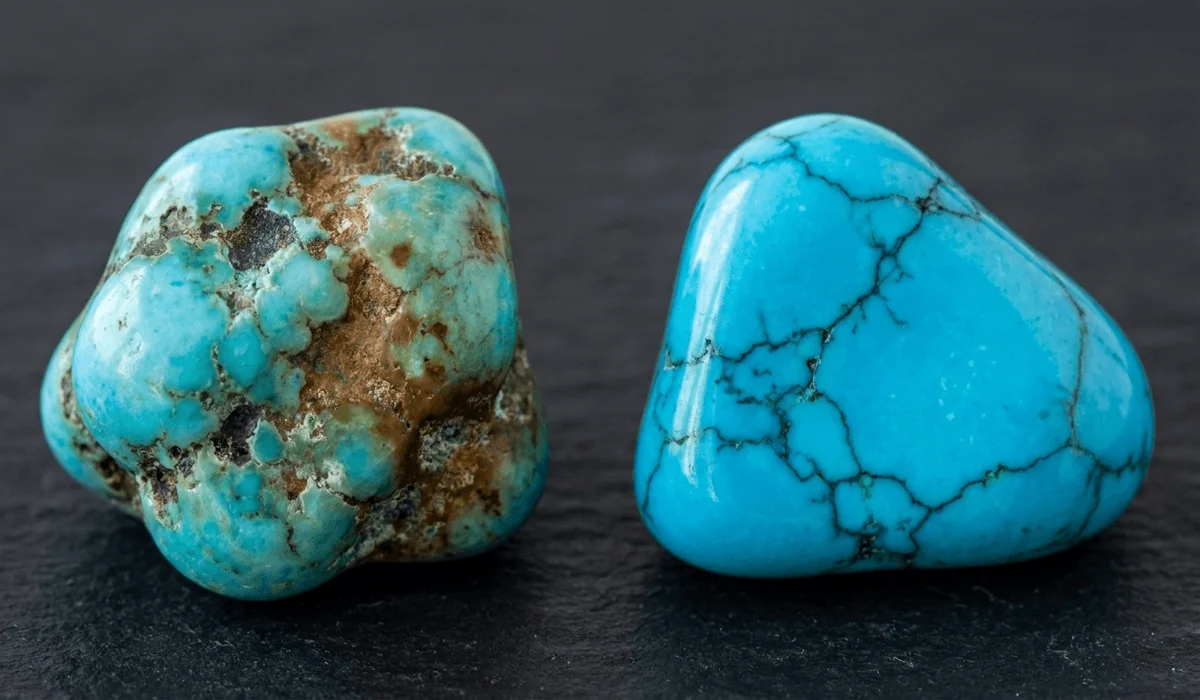
Real turquoise is an ancient hydrated phosphate mineral packed with copper and aluminum. When groundwater rich in copper flows through host rock over millions of years, it slowly deposits these iconic blue and green hues. Because of this slow, delicate process, natural gem-grade deposits remain quite rare and highly prized across the globe.
In contrast, howlite is an opaque white or ivory borosilicate mineral discovered during the nineteenth century. In its natural state, it features soft grey, dark brown, or black webbed veins running across a snowy background. Because natural howlite is porous and chalky, commercial lapidaries often soak it in synthetic blue dye to mimic expensive turquoise beads.
The jewelry trade frequently labels this altered material as turquonite. While turquonite looks charming in casual fashion jewelry, it is not a distinct mineral species. It remains treated howlite or magnesite, created purely to satisfy the high global demand for turquoise-colored accessories.
Origin, Composition, and Hardness Differences
Authentic turquoise emerges from arid desert regions where copper deposits weather naturally near the surface. Classic historical deposits include the American Southwest, ancient Persian mines in Iran, the Sinai Peninsula, and Hubei Province in China. Each mining region yields subtle variations in shade, ranging from bright robin egg blue to deep apple green.
Natural howlite comes primarily from extensive sedimentary evaporite beds in Nova Scotia, Canada, as well as desert basins in Southern California. These deposits form large, rounded nodules that look similar to heads of cauliflower. Mineralogists catalog howlite as a soft stone with a Mohs hardness rating of only 3.5.
This low hardness makes howlite very easy to carve, but it also means the stone scratches easily under light pressure. Genuine turquoise is noticeably harder, rating between 5.0 and 6.0 on the Mohs scale. For reliable data on mineral toughness and testing standards, gem collectors often consult the Gemological Institute Library.

Bohemian Turquoise Drop Pendant Necklace – Calm, Protection & Free-Spirited Style
- 💎 Stone: Turquoise
- 🖤 Necklace: Long Black Cord
- 📏 Circumference: 27.56 in / 70 cm
- ⚖️ Weight: 0.11 oz / 3 g
- ✨ Design: Petite Blue-Green Drop Pendant
- 🌿 Style: Bohemian, Minimalist, Vintage-Inspired and Unisex
Visual Matrix Characteristics and Authenticity Tips
Examining the surface matrix provides the fastest visual clue when comparing these two stones. In natural turquoise, the matrix consists of actual host rock remnants like limonite, sandstone, or shale. These veins show organic texture, varied earthy tones, and sometimes even tiny metallic glints from neighboring minerals.
Dyed howlite features dark spiderweb veins that were present when the stone was originally white. When workers soak the stone in color vats, artificial pigment pools heavily along these micro-fractures. If you look closely, you will see deep, unnatural blue concentrations bleeding into the dark lines of dyed howlite.
Surface luster also reveals noticeable differences between the two materials. Natural turquoise displays a distinctive waxy to sub-vitreous sheen that reflects light softly. Dyed howlite often shows a flat porcelain luster or an overly uniform, artificial shine that looks dipped in enamel.
Practical and Non-Destructive Gemstone Testing
You can perform several gentle, non-destructive tests at home without damaging your favorite jewelry pieces. First, use a 10x jeweler loupe to inspect the bead drill holes under bright, indirect sunlight. If the stone is dyed howlite, you will often spot stark white spots inside the drill hole where the dye failed to penetrate.
Second, observe how the stone reacts to ambient room temperature. When we handle raw minerals in our Buddha Bodhis studio, genuine turquoise remains cold to the touch and warms up very slowly against the skin. Porous dyed stones and plastic imitations tend to adapt to body warmth almost immediately.
For rare or high-value heirloom specimens, certified appraisers utilize specific gravity tests and refractometer readings. These scientific tools measure light refraction and density with extreme precision. The following video offers an excellent hands-on demonstration of visual matrix checks and simple testing techniques you can use right away.
Video source: YouTube
Author: Gem Rock Auctions
Original video link: https://www.youtube.com/watch?v=salfdyCBKtI
Here is a helpful summary table comparing the primary physical and geological traits of genuine turquoise and dyed howlite:
| Mineral Property | Genuine Natural Turquoise | Dyed Blue Howlite |
|---|---|---|
| Chemical Class | Hydrated copper-aluminum phosphate | Calcium borosilicate hydroxide |
| Mohs Hardness | 5.0 to 6.0 (moderate durability) | 3.5 (soft, easily scratched) |
| Natural Color Palette | Sky blue, robin egg blue, teal, apple green | Natural milky white with dark veins (dyed cyan) |
| Matrix Appearance | Natural host rock; organic brown, gold, or black | Dark veins with visible dye pooling in micro-cracks |
| Relative Market Cost | High to very high for untreated gem-grade | Extremely budget-friendly and accessible |
Spiritual Meaning & Symbolism
Beyond their physical chemistry, both stones carry rich symbolic meanings that resonate deeply with holistic energy practitioners. While turquoise connects with ancient sky traditions, howlite channels deep quietude and mental calm. Understanding these energetic profiles ensures you work with vibrations that truly match your spiritual goals.
Traditional Symbolism Across Cultures
For thousands of years, ancient cultures revered natural turquoise as a sacred bridge between the earth and the heavens. Native American tribes across the Southwest celebrated it as a living talisman of good fortune, sky energy, and spiritual safeguarding. In ancient Egypt and early Himalayan communities, kings and healers wore turquoise amulets to protect their travels and welcome divine blessing.
Those interested in exploring traditional folklore can review our comprehensive Turquoise Bracelet Spiritual Guide. Through centuries of human history, people have viewed genuine turquoise as an emblem of leadership, vocal honor, and inner truth. It reminds the wearer to walk through the world with clear principles and quiet dignity.
Natural white howlite carries a gentler, more contemplative spiritual legacy. Its pure ivory body represents quiet mental stillness, emotional neutrality, and freedom from racing thoughts. When craftsmen dye howlite blue, the stone still holds its foundational core energy of tranquil contemplation while adopting the soothing visual frequency of cool blue light.
Chakra Associations and Energetic Frequencies
In chakra healing systems, genuine turquoise serves as a premier stone for the throat chakra, located at the center of vocal expression. When this center flows freely, you can voice your feelings clearly without fear, defensiveness, or hesitation. Turquoise also gently brushes against the higher heart space, helping you express your deepest emotional truths with honest compassion.
Natural white howlite strongly resonates with the crown chakra at the top of the head. This energy vortex governs higher spiritual wisdom, mental processing, and peaceful meditation. Placing howlite on your altar quiets obsessive mental chatter, easing you into deep contemplation and restful stillness.
Dyed blue howlite creates an interesting hybrid experience during daily meditation sessions. The artificial blue tone stimulates visual calmness associated with clear expression, while the underlying calcium borosilicate mineral anchors overactive mental loops. Many practitioners find this combination helpful when they feel nervous before giving an important presentation or engaging in a tough conversation.
Cultural History and Trade Nomenclature
In retail jewelry markets, you may occasionally see bins labeled with the confusing name white turquoise. From a geological standpoint, genuine turquoise cannot form as a pure white mineral because copper or iron is necessary to create its crystal matrix. When vendors advertise white turquoise, they almost always sell natural white howlite or white magnesite under an inflated price tag.
A notable exception is White Buffalo stone from Nevada, which miners often call white turquoise in colloquial trade circles. However, laboratory assays show that White Buffalo is actually an alumophosphate mineral related to variscite rather than true turquoise. Misidentifying howlite as turquoise damages consumer trust and prevents buyers from appreciating howlite for its own wonderful qualities.
We always encourage crystal lovers to celebrate every mineral under its rightful geological name. Howlite is a worthy and peaceful stone that needs no false labels to prove its value. Transparent sourcing respects both the natural earth and the personal intentions of the person wearing the beads.
Benefits & Intentions Associated with Turquoise vs. Dyed Howlite
Working with intentional jewelry allows you to focus your daily mindset around specific emotional and spiritual goals. Depending on whether you wear authentic turquoise or dyed howlite, your energetic focus shifts between vocal empowerment and quiet inner serenity. Choosing the right companion depends on what your spirit needs most right now.
Commonly Associated Intentions
Authentic turquoise is the perfect mineral ally when you wish to build personal sovereignty, verbal clarity, and emotional protection. If you are stepping into a leadership role or managing sensitive team dynamics, turquoise serves as a steady reminder to speak honestly. Many collectors refer to our Crystal Meanings Reference to match these intentions with their personal gemstone routines.
Dyed howlite serves a very different yet equally valuable daily purpose. Its soothing presence helps dissolve situational anger, chronic impatience, and mental exhaustion after long hours at a demanding job. When life feels chaotic, touching dyed howlite beads reminds your nervous system to pause, breathe, and let go of irrational irritation.
Here are several popular intentions that align beautifully with both stones:
- 💎 Turquoise Intentions: Clear boundary setting, fearless public speaking, creative storytelling, and spiritual protection during long travel journeys.
- 🌿 Howlite Intentions: Deep muscle relaxation, mindful patience with difficult colleagues, stress reduction, and undisturbed evening rest.
- 🔮 Shared Harmony: Releasing emotional resentment, balancing the body’s natural Chi (气) energy, and fostering sincere, gentle communication.
By defining your personal intention before slipping your bracelet onto your wrist, you transform simple jewelry into an active mindfulness anchor.

Mindfulness & Personal Practices
Integrating genuine turquoise into your morning breathwork or vocal warm-up exercises can unlock creative expression. Many speakers hold a genuine turquoise tumbled stone near the collarbone while chanting simple grounding mantras. This sensory ritual grounds physical tension in the jaw and neck, clearing the way for smooth vocal delivery.
Dyed howlite excels during evening unwinding rituals and bedtime journaling sessions. Placing a smooth howlite palm stone on your nightstand helps quiet stubborn mental replays of daily stressors. Holding the cool, lightweight stone while writing your evening gratitude list encourages your body to prepare for peaceful sleep.
You can also use dyed howlite beads during color-visualization meditation practices. Closing your eyes and imagining a wave of soft cyan light moving through your chest calms rapid breathing. These accessible mindfulness exercises demonstrate that even budget-friendly stones can offer profound emotional support when used with clear purpose.
How to Wear Turquoise and Dyed Howlite
In traditional Eastern philosophies and modern energetic practices, how you wear your gemstone jewelry influences how its energy interacts with your physical body. Placement choices guide whether you receive restorative vibrations inward or project confident energy out into your social environment.
Left Hand vs. Right Hand (Feng Shui Logic)
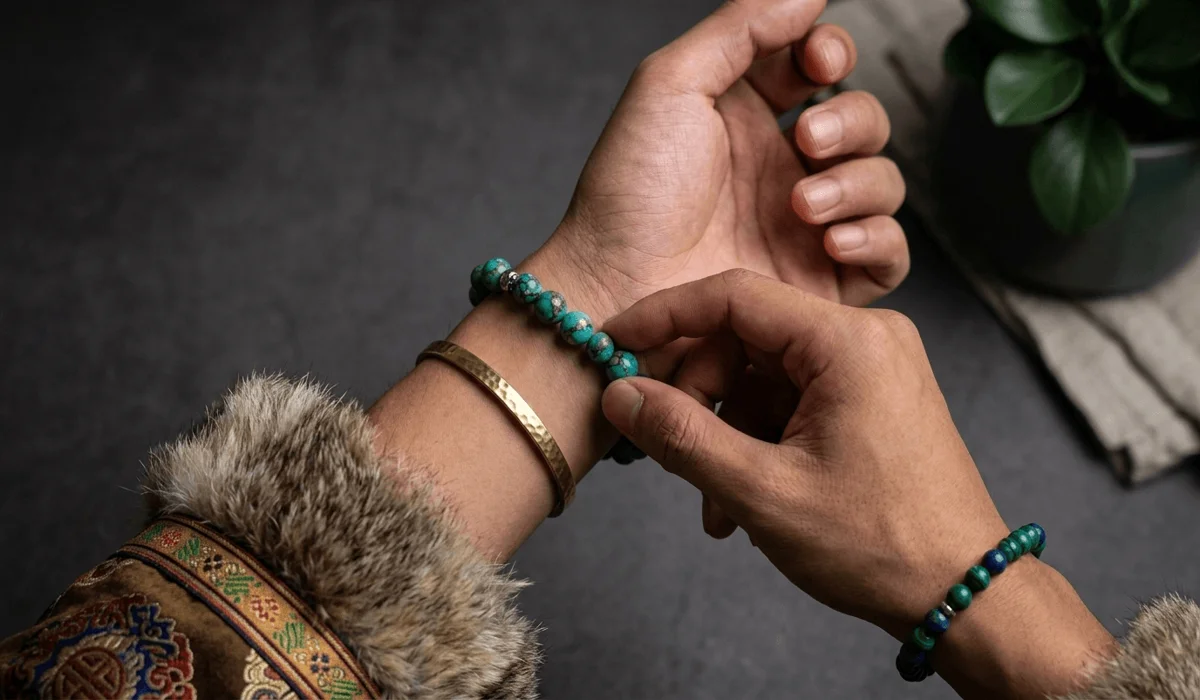
According to classical Feng Shui philosophy, your left hand functions as the receptive gate, welcoming vital Chi (气) into your body. Wearing a genuine turquoise bracelet on your left wrist allows you to absorb steady emotional reassurance, protective spiritual shielding, and deep inner peace. It helps sensitive individuals maintain calm composure when entering busy or noisy spaces.
Your right hand acts as the expressive gate, channeling your personal power and thoughts out into the world. Adorning your right wrist with turquoise strengthens your voice during presentations, negotiations, or important boundary conversations. It encourages honest speech that remains respectful, tactful, and firm.
Wearing dyed howlite on your left wrist helps you internalize patience, quiet listening skills, and mental calmness during stressful shifts. If you struggle with sharp temper flare-ups or reactive speech, wearing howlite on your right wrist helps filter your words before you speak. This practice softens reactive habits, promoting harmony within your home and workplace.
When People Choose to Wear It
People often select turquoise jewelry when embarking on cross-country travel, resolving family misunderstandings, or interviewing for major career advancements. Its rich history as a protective traveler amulet brings comfort during long flights or road trips. The stone serves as a physical reminder that your voice and safety remain grounded throughout every transition.
Howlite bracelets shine during exam weeks, tax season, or demanding caregiving routines when patience wears thin. Gemologists from the Gemmological Association Foundation often point out howlite unique soft texture, making it lightweight and comfortable for all-day wear at an office desk. Its gentle weight never distracts you while typing or taking detailed notes.
Some practitioners choose to wear both stones together in layered bead stacks. This pairing blends howlite quiet mental focus with turquoise clear vocal truth, creating a balanced mindset for busy workdays. You can stay calm inside while remaining thoroughly articulate and assertive on the outside.
Intention-Setting Practices and Jewelry Selection
Before placing any gemstone bracelet on your wrist, take a quiet moment each morning to seal your intention. Hold the beads between both palms, take three slow diaphragmatic breaths, and picture your goals for the day ahead. This simple thirty-second habit transforms your morning dressing routine into a grounding meditation.
When selecting pieces for your sacred jewelry collection, always prioritize trustworthy artisans who state stone treatments openly. You can browse our dedicated Artisanal Turquoise Jewelry to find genuine natural pieces crafted with care and spiritual reverence. Sourcing authentic minerals guarantees you enjoy the true geological frequency of these timeless earth treasures.
“True crystal wisdom does not depend on how much a stone costs, but on the honesty of its identity and the clarity of your intention.”
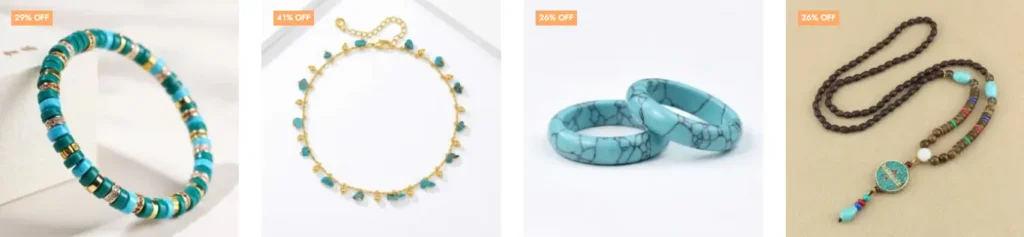
Turquoise vs Similar Stones or Bracelets
Dyed howlite is not the only mineral that causes confusion in the turquoise marketplace. Several other natural gems share similar matrix patterns or copper-based blue shades. Comparing these alternatives ensures you can recognize what you are buying wherever you travel.
Turquoise vs Dyed Magnesite
Magnesite is a magnesium carbonate mineral that forms in chalky white nodules much like howlite. Because magnesite is porous and naturally white, commercial suppliers frequently soak it in deep blue dyes to imitate spiderweb turquoise. In fact, dyed magnesite often displays darker, tighter matrix patterns that trick even experienced jewelry buyers.
However, magnesite feels slightly denser in the hand than howlite and reacts with effervescence when exposed to warm laboratory acids. In metaphysical traditions, magnesite connects deeply with the heart chakra, encouraging self-love, emotional release, and deep unconditional acceptance. Dyed howlite focuses primarily on clearing mental clutter, while magnesite targets emotional wounds lodged in the chest.
Compared to true turquoise, dyed magnesite feels noticeably chalkier and lacks the waxy luster of fine copper phosphate. If you scratch the back of a dyed magnesite bead with a steel point, it leaves a white powdered furrow. Gem-grade turquoise resists light scratches and maintains its rich color deep beneath the surface.
Turquoise vs Shattuckite and Chrysocolla
Chrysocolla and shattuckite are natural copper silicate minerals that showcase stunning shades of cyan, royal blue, and malachite green. Unlike dyed howlite, these stones require no artificial color enhancements to achieve their breathtaking appearances. They form directly alongside turquoise in copper mines, often blending together into gorgeous multi-colored composite stones.
Chrysocolla carries a gentle, water-like feminine energy that soothes heartache and encourages emotional wisdom. Shattuckite resonates with a much higher psychic frequency, often used by intuitive readers to enhance spiritual visions and mental discernment. Both minerals are softer than gem-grade turquoise, yet their untreated colors remain completely stable when protected from harsh chemicals.
When choosing between these copper minerals, trust your personal intuition. If you seek classic protection and clear speech, choose natural turquoise. If you desire soothing emotional comfort or heightened intuitive clarity, natural chrysocolla or shattuckite will serve your sacred space beautifully.
Who Is Turquoise and Dyed Howlite Suitable For?
Every individual carries a unique energetic blueprint shaped by lifestyle habits, career demands, and personal astrology. Matching your chosen gemstone to your current life circumstances ensures the stone provides practical, uplifting support throughout your daily routines.
Chakra or Energy Alignment
Genuine turquoise is ideal for anyone experiencing blocks around honest self-expression or healthy boundary setting. If you find yourself swallowing your words to keep the peace or struggling with throat tension before difficult meetings, turquoise offers grounding support. It clears static from your voice, allowing your authentic truth to emerge with ease.
Dyed howlite is the ultimate companion for anyone suffering from an overstimulated upper chakra system or chronic sensory overload. If your thoughts race uncontrollably when your head hits the pillow at night, howlite soothing energy offers rapid relief. It gently quiets mental noise, guiding your mind into a restful, restorative state.
For meditation practitioners who enjoy visual color therapy, dyed howlite offers an affordable focal point. Its bright cyan hue delights the eyes, while its soothing calcium borosilicate structure promotes relaxed breathing. It creates a serene mental sanctuary during quiet contemplation.
Zodiac and Astrological Associations
Natural turquoise shares an ancient affinity with the adventurous sign of Sagittarius. As a talisman of protection, wisdom, and world travel, turquoise mirrors the optimistic, truth-seeking nature of the Centaur. It keeps wandering spirits safe on physical journeys while grounding their lofty philosophical ideals into practical action.
Turquoise also resonates deeply with sensitive water and air placements, including Pisces and Aquarius. It provides cooling clarity that helps introspective individuals express their emotions without feeling overwhelmed. The stone serves as an emotional rudder through turbulent social currents.
Howlite is an exceptional ally for fast-moving Gemini and detail-oriented Virgo placements. Both signs are ruled by Mercury, the planet of thought and communication, making them prone to mental exhaustion and perfectionist worry. Howlite slows their racing thoughts, helping these analytical signs rest, recover, and embrace relaxed self-compassion.
Lifestyle & Personal Intentions
Public school teachers, corporate trainers, counselors, and public speakers benefit immensely from wearing genuine turquoise every day. These professions require hours of vocal projection, active listening, and energetic boundary maintenance. Turquoise supports vocal stamina while protecting personal energy from burnout.
Dyed howlite is an incredible asset for college students, medical workers, caregivers, and high-stress corporate employees. Touching smooth howlite beads during intense moments acts as an instant tactile reset button for the central nervous system. It helps you stay patient with demanding patients, clients, and family members.
Finally, conscious crystal collectors who value mineral transparency will appreciate having both stones in their display cases. Keeping an authentic turquoise specimen alongside a dyed howlite bead provides an educational conversation starter for visiting friends. It honors the fascinating mineral diversity of our planet.
How to Cleanse, Charge, and Care for Turquoise and Dyed Howlite
Proper mineral hygiene keeps your gemstones physically vibrant and spiritually clear. Because both turquoise and howlite are porous minerals with distinctive chemical structures, they require mindful care to prevent accidental discoloration or structural damage.
Cleansing Methods
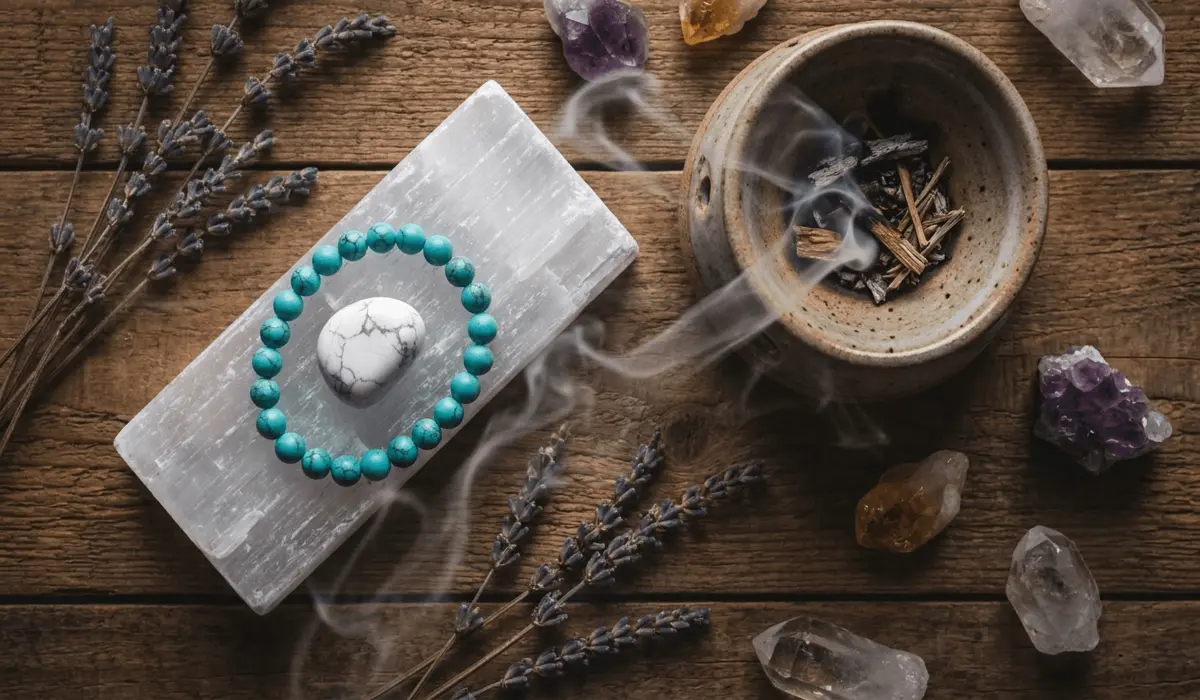
The safest way to clear stagnant energy from both stones is through dry smoke cleansing. Pass your bracelets slowly through the fragrant smoke of dried white sage, cedar sprigs, or sweetgrass braids. Smoke cleansing removes energetic residue without exposing porous mineral structures to damaging moisture.
Acoustic sound cleansing is another fantastic, completely non-invasive clearing method. Ringing a Tibetan singing bowl, chiming brass tingshas, or playing a 432 Hz tuning fork cleanses your beads within seconds. Pure sound waves reorganize crystalline vibrations without scratching soft howlite surfaces.
Never submerge turquoise or dyed howlite in tap water, salty ocean baths, or ultrasonic jewelry tanks. Howlite is soft and easily damaged by water, while salt will quickly corrode the natural matrix inside turquoise. Ultrasonic vibrations can shatter delicate fissures running through natural turquoise gems.
Charging Practices
To recharge the subtle energy of your beads, lay them under the gentle light of the waxing or full moon. Moonlight offers cool, receptive energy that revitalizes both stones without causing thermal shock. Avoid leaving turquoise under harsh direct midday sun, as prolonged UV radiation can dry out hydrated minerals and fade artificial dyes.
Resting your gemstone bracelets overnight on a raw selenite charging plate or inside a clear quartz bowl works wonders. Selenite constantly cleanses and recharges neighboring stones without needing to be recharged itself. This practice ensures your bracelets feel refreshed and ready for wear every morning.
You can also place your stones near healthy houseplant soil or inside an untreated wooden bowl. According to the geological records on the Online Mineral Encyclopedia, both minerals originate from sedimentary environments. Resting them near natural wood reconnects their internal crystalline structures with stabilizing earth vibrations.
Daily Care & Storage
Natural turquoise is sensitive to common household chemicals, lotions, hairsprays, and perfumes. Always apply your cosmetics, skin serums, and body fragrances several minutes before putting on your turquoise jewelry. Body oils and sweat can gradually soak into untreated turquoise pores, causing the blue shade to shift permanently toward dull olive green.
Dyed howlite requires similar caution to safeguard its superficial blue colorant. Keep your dyed howlite beads away from rubbing alcohol, acetone nail polish removers, hand sanitizers, and abrasive fabrics. Chemical solvents will strip the artificial blue dye away, revealing the chalky white stone beneath.
Store your gemstone bracelets separately in individual microfiber pouches or velvet-lined jewelry drawers. Storing soft howlite or porous turquoise loose beside hard quartz, diamonds, or metal cuffs can cause unsightly surface scratches. Mindful storage protects the polished finish of your jewelry for years of daily enjoyment.
Mindful Adornment Summary: Whether you resonate with the vocal empowerment of authentic turquoise or the quiet mental calm of dyed howlite, wearing stones with conscious awareness enriches your spiritual path. Embrace transparency, care for your beads with gentle respect, and allow your jewelry to serve as a daily touchstone for personal balance and authentic truth.
Frequently Asked Questions
Q: How to tell the difference between turquoise and dyed howlite?
A: Look closely at the dark matrix veins under bright light to see if artificial blue dye pools inside surface cracks. You can also test mineral hardness, since howlite scratches easily at 3.5 on the Mohs scale while turquoise is harder at 5.0 to 6.0. Additionally, unusually low prices for large, flawless sky-blue beads strongly point to dyed howlite.
Q: Why is dyed howlite called white turquoise?
A: The label white turquoise is a deceptive marketing name created to sell inexpensive white howlite or magnesite at inflated retail prices. True turquoise requires copper or iron to form its crystal matrix, meaning genuine turquoise cannot chemically occur as a pure white stone. Gemological bodies classify howlite as an entirely separate calcium borosilicate mineral.
Q: What are the metaphysical differences between blue howlite and turquoise?
A: Genuine turquoise carries an outward-facing protective energy that stimulates honest vocal expression, clear boundary setting, and self-confidence. Blue howlite retains the foundational energy of white howlite, which specializes in calming an overactive mind, releasing anger, and promoting deep patience. Turquoise empowers your voice, while howlite brings soothing quietude to racing thoughts.
Q: How to spot fake turquoise without damaging the stone?
A: Inspect the bead drill holes using a 10x jeweler loupe to check if the interior is white rather than uniform blue. Touch the stone to your cheek to observe its temperature, as authentic turquoise stays cool longer than plastic or synthetic resin substitutes. Finally, check the bead weight in your hand, since real mineral turquoise feels noticeably compact and cool.
Q: Can dyed howlite fade over time?
A: Yes, the synthetic blue pigments used on porous howlite beads can fade when exposed to prolonged sunlight, sweat, or harsh chemicals. Contact with hand sanitizers, perfumes, rubbing alcohol, and household soaps dissolves surface dyes and exposes the natural white howlite underneath. Storing your beads away from direct sunlight and cleaning them with dry smoke preserves their blue color.
Conclusion & Gentle Next Step
Both genuine natural turquoise and dyed blue howlite hold respectable places in the world of gemstones, provided they are represented with complete honesty. Authentic turquoise stands as an unmatched historical talisman for those seeking vocal sovereignty, truth, and protective earth grounding. Meanwhile, dyed howlite offers an accessible, visually uplifting reminder to cultivate patience, emotional poise, and mental calm in a fast-paced world.

Tribal Turquoise Heishi Bead Bracelet – Handcrafted Protection Amulet
Guard your spirit. Speak your truth. A vibrant shield of earth and sky.
This Tribal Turquoise Heishi Bracelet is a sophisticated homage to ancient protection rituals. Expertly hand-strung with high-quality optimized turquoise in a rare Heishi (disc) cut, this piece captures the raw essence of the desert. Interspersed with shimmering gold-plated spacers and subtle crystal accents, it offers a versatile look that transitions from a casual weekend retreat to a structured professional setting.
The 6x3mm disc beads provide a seamless drape over the wrist, acting as a functional anchor for your Protection & Support. Whether worn as a standalone statement or stacked with other mineral pieces, this sturdy amulet ensures you remain grounded and confident throughout your journey.
- 🛡️ Stone: Natural Optimized Turquoise (The Master Healer)
- 📐 Design: Traditional Heishi Disc Cut for an effortless ethnic vibe
- ⚖️ Experience: Substantial 15-19g weight with a cooling, organic touch
- ✋ Wear on: Left Hand to absorb protective energy
Conscious crystal adornment begins with accurate knowledge and mindful discernment. When you know exactly what minerals you wear, your daily intentions carry greater focus and integrity. We warmly welcome you to explore our thoughtfully curated gemstone collections to discover authentic, handcrafted pieces that honor your personal spiritual journey.
This content is published strictly for educational, informational, and cultural appreciation purposes. Gemstone meanings and energetic traditions reflect historical folklore and personal mindfulness practices, and they do not constitute medical, legal, psychological, or financial advice. If you have medical concerns or health conditions, please consult a qualified healthcare professional.

Written by the Buddha Bodhis Team
Since 2020, we have been devoted to exploring traditional year-based wisdom, classical Feng Shui principles, and the rich spiritual symbolism rooted in Eastern cultural heritage. Our work bridges ancient metaphysical systems with modern life, interpreting annual cycles, elemental energies, and symbolic meanings to offer thoughtful insight and practical guidance. Through continuous research and practice, we aim to preserve traditional knowledge while making it accessible, relevant, and meaningful for contemporary seekers of balance, intention, and personal growth.
TikTok | YouTube | Pinterest | X
buddhabodhis@gmail.com